
Menu
Armoda works with independent, third-party Certified Welding Inspectors (CWIs) to uphold the highest standards of quality and safety throughout all welding operations. By meticulously overseeing every stage of the fabrication process, these impartial experts ensure that all structural and modular building components conform to strict industry codes and specifications. This unbiased verification is essential for guaranteeing optimal performance in the challenging environments where our clients operate.
Armoda delivers modular solutions, such as accommodation units, offices and workshops, across diverse sectors—from offshore oil and gas platforms to onshore industrial sites. These facilities serve as vital operational centers and must be engineered to endure extreme conditions. The integrity of each weld directly impacts both the safety of personnel and the reliability of critical equipment. Engaging independent inspectors provides an objective layer of quality assurance, making rigorous, third-party verification an indispensable part of our process.
The fundamental purpose of engaging a CWI is to obtain independent verification that all welded connections meet exacting standards and project requirements. This is achieved through precise inspection and a structured testing regimen. Functioning as a final, unbiased checkpoint for structural deficiencies, the CWI conducts a comprehensive visual examination and initiates advanced testing when necessary. This systematic approach, conducted by an external professional, safeguards assets and personnel by ensuring that fabrication quality is never compromised.
Codes, Standards, and Compliance in Structural Fabrication
In fabrication, structures must be robust and adhere to recognized codes and standards that govern safety and performance. At Armoda, inspection procedures are mostly derived from AWS D1.1 for steel structures and AWS D1.2 for aluminum, or from specific customer requirements. These codes form the primary benchmarks for evaluating weld integrity across most projects.
Often, projects also require compliance with additional oversight by organizations such as the American Bureau of Shipping (ABS), the United States Coast Guard (USCG), Det Norske Veritas (DNV), and the Convention for Safe Containers (CSC). Each regulatory body imposes unique material, procedural and inspection requirements, affecting everything from joint design to final acceptance criteria. A third-party CWI’s expertise in navigating these layered standards is critical for ensuring that all compliance obligations are precisely met, particularly when industry-specific or international certifications are necessary.
The Independent Inspection Process and Quality Assurance
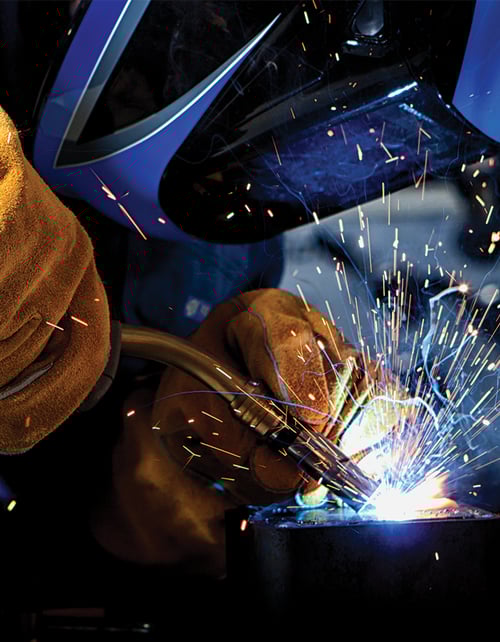 The CWI’s role encompasses detailed oversight at every stage, from fit-up to final acceptance. Before welding commences, the inspector reviews joint preparation and fit-up, validating that material selections and welding procedures align with project codes. During fabrication, they monitor each weld pass for defects like cracks, porosity, incorrect bead profiles or lack of fusion that could impact overall integrity.
Inspections primarily involve visual examination, but CWIs will sometimes require Non-Destructive Testing (NDT). These advanced methods, including ultrasonic (UT), radiographic (RT) or magnetic particle (MT) inspection, can detect subsurface and internal flaws not visible on the surface. All findings are meticulously documented by the third-party inspector, forming a continuous, objective record that supports both in-process adjustments and final client turnover requirements.
Reducing Risk and Supporting Project Success
The oversight of an independent CWI significantly reduces the likelihood of costly rework, schedule delays or safety incidents. By identifying and rectifying deficiencies early, these inspectors prevent non-conforming welds from advancing to critical stages. For example, a CWI will inspect and proof-test high-load attachments, such as lift lugs, to ensure that components meet required performance criteria and to mitigate the risk of operational failures. This proactive, impartial quality management strategy contributes directly to improved project outcomes, asset reliability and streamlined regulatory approval.
What Project Buyers Should Expect
When engaging with Armoda, clients can expect the CWI services integrated into their project to be managed with professionalism and transparency. The inspectors Armoda engages are certified by recognized bodies such as the American Welding Society and possess practical experience with relevant materials and across industry sectors. At project completion, clients often receive a documentation package, which includes:
- Welder qualification records and certifications
- Approved Welding Procedure Specifications (WPS)
- Detailed weld maps and NDT reports
- Material traceability records
- Calibration certificates for all inspection and testing equipment
This comprehensive documentation ensures full transparency, traceability of quality, and independent verification of compliance for all fabricated modules and structures. For organizations committed to the highest quality and safety standards, Armoda’s use of independent Certified Welding Inspectors supports reliable project delivery and enduring operational integrity. Contact us for more details or to start your next project.